
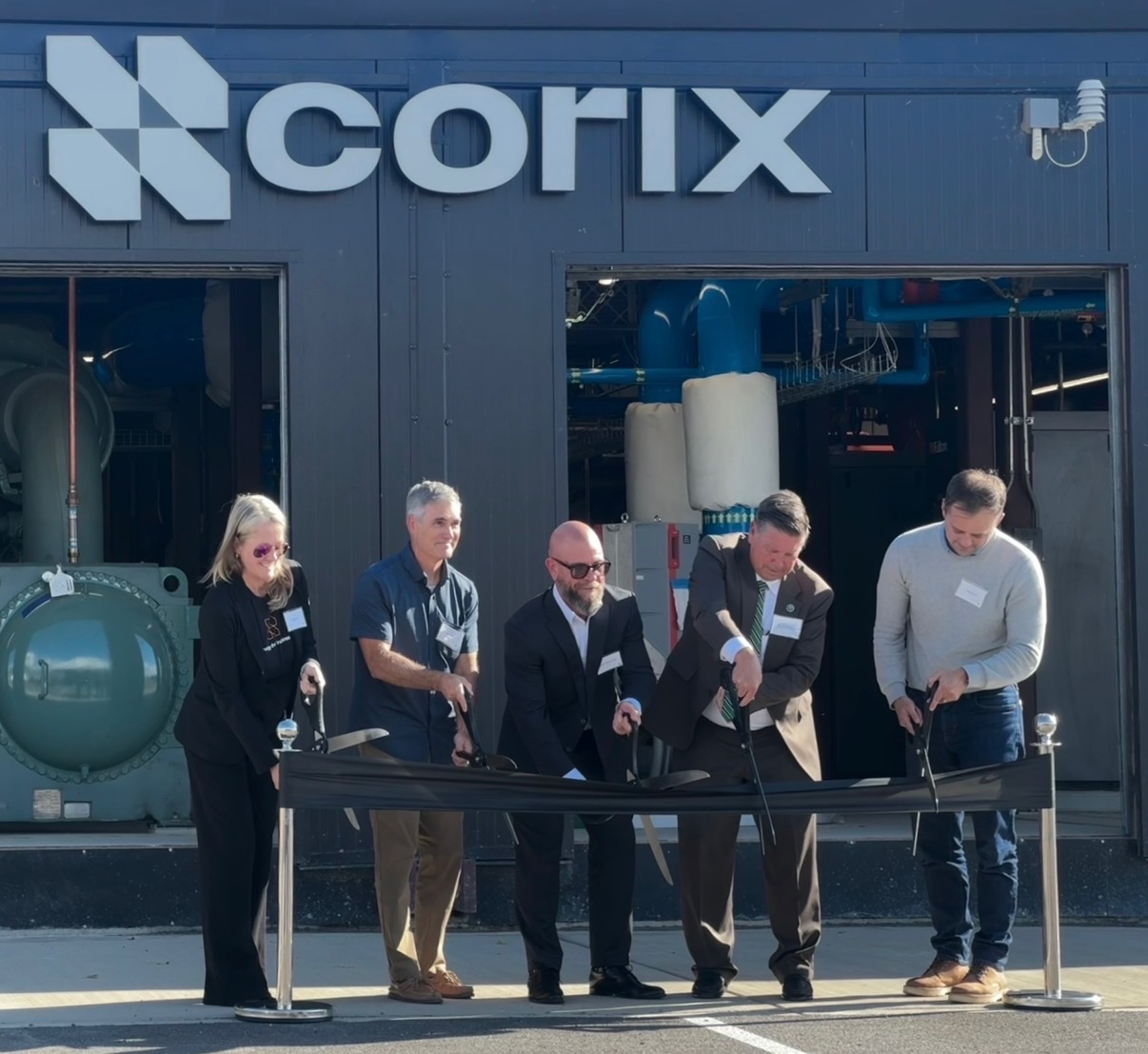
Vineyard’s newest piece of infrastructure isn’t a road, building or park. It’s an energy center designed to help power the community taking shape along the shores of Utah Lake.
Last week on September 16, Utah City and Corix held the ribbon cutting of a new Sustainable Energy Center that will provide centralized heating and cooling for buildings throughout the 350-acre development.
Rather than having each building rely entirely on its own heating and cooling equipment, Utah City’s system will connect buildings to a shared network. The approach is bringing in baseload energy, which allows energy to be more stable and used more efficiently across different types of buildings, while creating opportunities to reuse heat that would otherwise be lost.
At full build-out, the network is expected to serve about 18 million square feet of residential, retail, commercial and medical space. Corix estimates the system could reduce electricity demand by as much as 70 megawatts and eliminate the need for more than 17,000 individual water heaters and HVAC systems across the development.
The centralized approach is also projected to produce significant long-term savings. Corix estimates savings could amount to more than $100 million over 15 years through the system’s efficiencies.
The project is part of a larger vision for Utah City, Vineyards downtown, which is being developed by Flagborough along their eastern shoreline. The development is planned to bring a mix of housing, businesses, retail, medical research and other uses to the area, including another headquarters of Huntsman Cancer Institute with a Utah Valley University connection.
For Flagborough, the energy system is intended to be more than infrastructure that supports the development. It is part of the project’s effort to incorporate stability and sustainability into how the community functions as it grows.
“By building a district energy system that, over time, can be powered mostly from recycled waste heat, we can deliver both a cost-efficient system for our residents and a system that can help keep Utah beautiful,” said Pete Evans of Flagborough.
Utah City is expected to continue developing through 2040, meaning the energy center is being built with a much larger future community in mind. As construction continues, the system will expand to support the buildings and residents that eventually make up the new district.
Sources:
