
Vineyard Mayor Zack Stratton has issued an executive order temporarily halting enforcement of the city’s Transportation Utility Fee (TUF), which was first billed in February 2026 for the January utility cycle, while officials conduct a financial and policy review of the program (1).
The recently announced order immediately suspends penalties and fines associated with the fee and directs city staff to stop enforcement actions while the review is underway. City leadership also indicated that a comprehensive evaluation of the methodology and financial assumptions used to calculate the fee will take place.
“We’ve got to rework these assumptions,” Stratton said during a recent city council work session (2), speaking about his goals to make sure Vineyard businesses do not face a competitive disadvantage.
The Transportation Utility Fee was adopted by the Vineyard City Council in December 2025 as part of a long-term strategy to fund road construction, maintenance, and pavement preservation as the city continues to grow. Councilmember Jake Holdaway voted in favor of the fee, while newly appointed Councilmember Ezra Nair abstained from the vote (3).
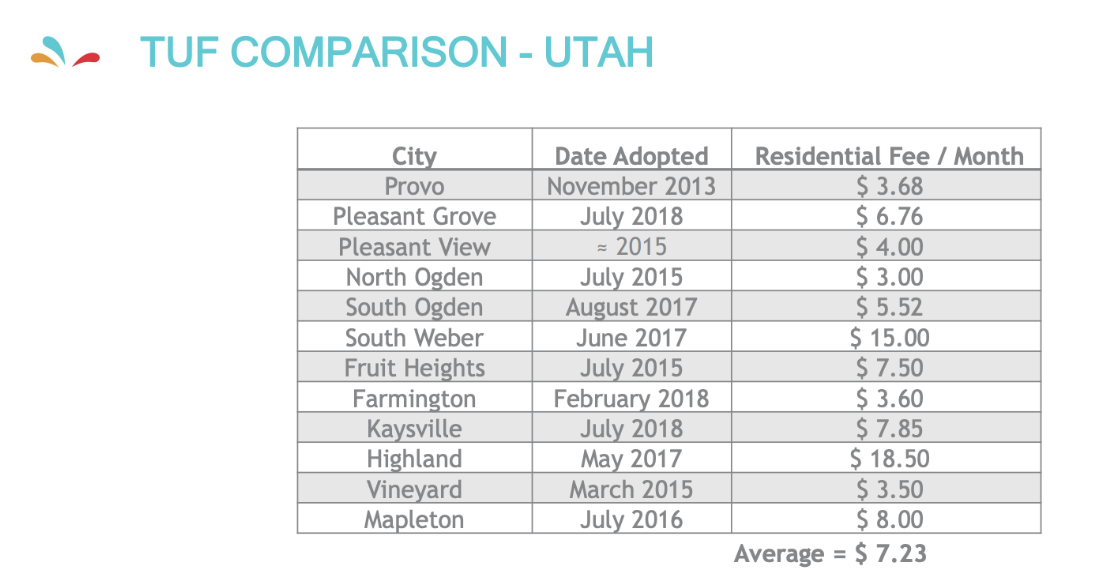
Transportation utility fees are used by many Utah municipalities as a dedicated funding source for infrastructure upkeep. Vineyard first implemented the fee in 2015, paused it in January of 2020 during pending litigation over Pleasant Grove’s transportation fee structure (4), and reinstated it in 2025 after PG was favored, and adjustments were made to state policy (5). According to comparisons of Utah cities presented during earlier discussions, Vineyard’s residential transportation fee, set at approximately $4.75 per month for residential users, remains below the statewide average of about $7.23 per month, with some cities charging as much as $18.50 (6).
However, concerns from some business owners have surfaced after commercial utility bills reflected significantly higher transportation charges calculated based on building size and roadway impact. One business owner shared a utility statement on social media showing a monthly transportation charge of $4,956, prompting questions about the fee’s structure and implementation (7).
Councilmember Parker McCumber noted during the discussion that transportation costs can influence long-term business decisions, including hiring and expansion.
“This fee represents a structural cost that compounds over time,” McCumber said. “It doesn’t just affect a balance sheet; it affects hiring decisions, expansion, and whether businesses choose to locate in Vineyard at all.” (8)
City officials say the review will examine the fiscal impact of reducing or removing the fee, how potential changes could affect transportation services, and whether alternative funding strategies may be needed to maintain roads and related infrastructure.
Nair emphasized opportunities for a flat rate for simpler billing and more predictable costs for businesses, or fee alternatives, and emphasized the importance of fairness and consistency in how the policy is administered. He suggested that if businesses are being told not to pay the fee during the review period, the city should consider a formal moratorium and evaluate potential refunds to ensure equitable treatment (9).
Transportation infrastructure remains one of the fastest-growing cost pressures for Vineyard, a rapidly growing community that has expanded from a few hundred residents to more than 22,000 in recent years (10). Commercial activity has also increased significantly as new businesses and nationally recognized anchors, such as the Huntsman Cancer Institute, have located in the city (11).
Maintaining roadway systems, including pavement preservation and stormwater compliance, requires long-term funding strategies that cities typically address through a mix of fees, taxes, and development-related funding mechanisms.
City officials indicate that exploring alternative transportation funding options has been an ongoing discussion in Vineyard for several years. During the previous administration, city leaders evaluated potential sales tax–based transportation funding and other long-term infrastructure strategies to support road maintenance and expansion in the rapidly growing community. Officials say those studies are expected to continue as the city reviews transportation funding options amid increasing demand on roadway infrastructure.
